
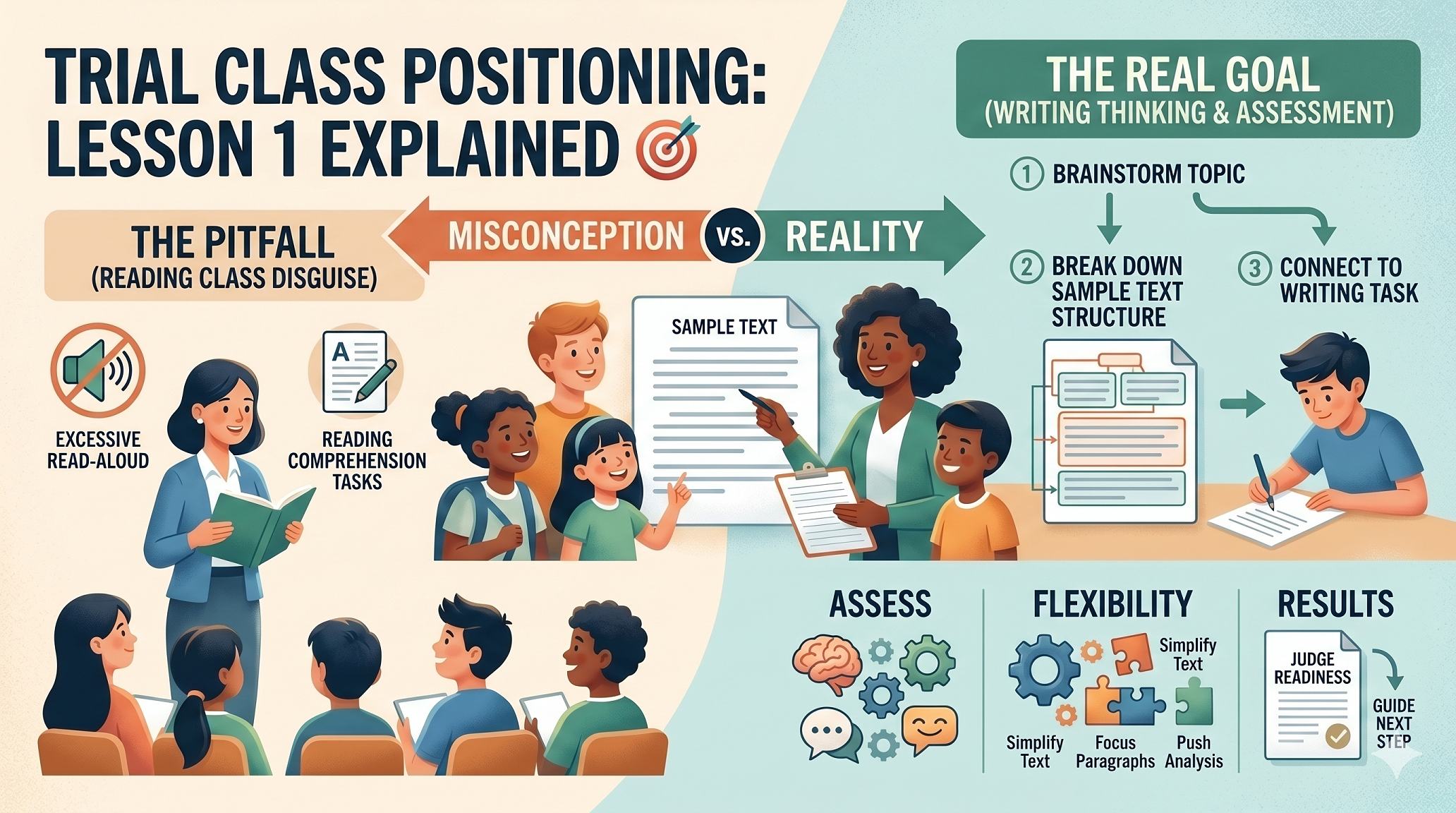
A trial class is not a reading lesson in disguise. Its purpose is to give students a real taste of how our writing programme works, while helping the teacher assess the student’s comprehension, structural thinking, and expression.
One common mistake is to let the class drift into read-aloud or reading-comprehension mode. That takes time away from the real purpose of Lesson 1, which is to help students think about how a writing task is built, how ideas are organised, and how the sample supports the writing structure. The sample should lead students into writing, not pull the lesson away from it.
At the same time, a trial class should feel reassuring. Because we do not know the student’s level perfectly at this stage, the teacher may need to adjust the material on the spot: if the text feels too easy, push the structural thinking further; if it feels too hard, narrow the focus, simplify the language, or work through only part of the sample. The teacher’s value is not in following the plan mechanically, but in making the lesson work for the student in front of them.
Just as importantly, the teacher should make the purpose of the lesson explicit. Students should understand why they are analysing the sample, what they are expected to notice, and how this connects to the writing task they will complete later. By the end of the lesson, they should feel clear about the lesson flow, confident enough to keep going, and better informed about whether this programme is the right fit for them.