
CROSS-DISCIPLINARY READING · 跨領域閱讀
北極動物怎麼適應?
用英文讀懂因果。
同樣是毛,保暖和偽裝是兩件事。點選特徵,看它怎麼發揮作用。
閱讀完整英文短文 More Than a Warm Coat
More Than a Warm Coat
The Arctic is a cold environment. Animals living there need ways to cope with low temperatures and find food. An adaptation is a feature that helps a living thing survive in its environment.
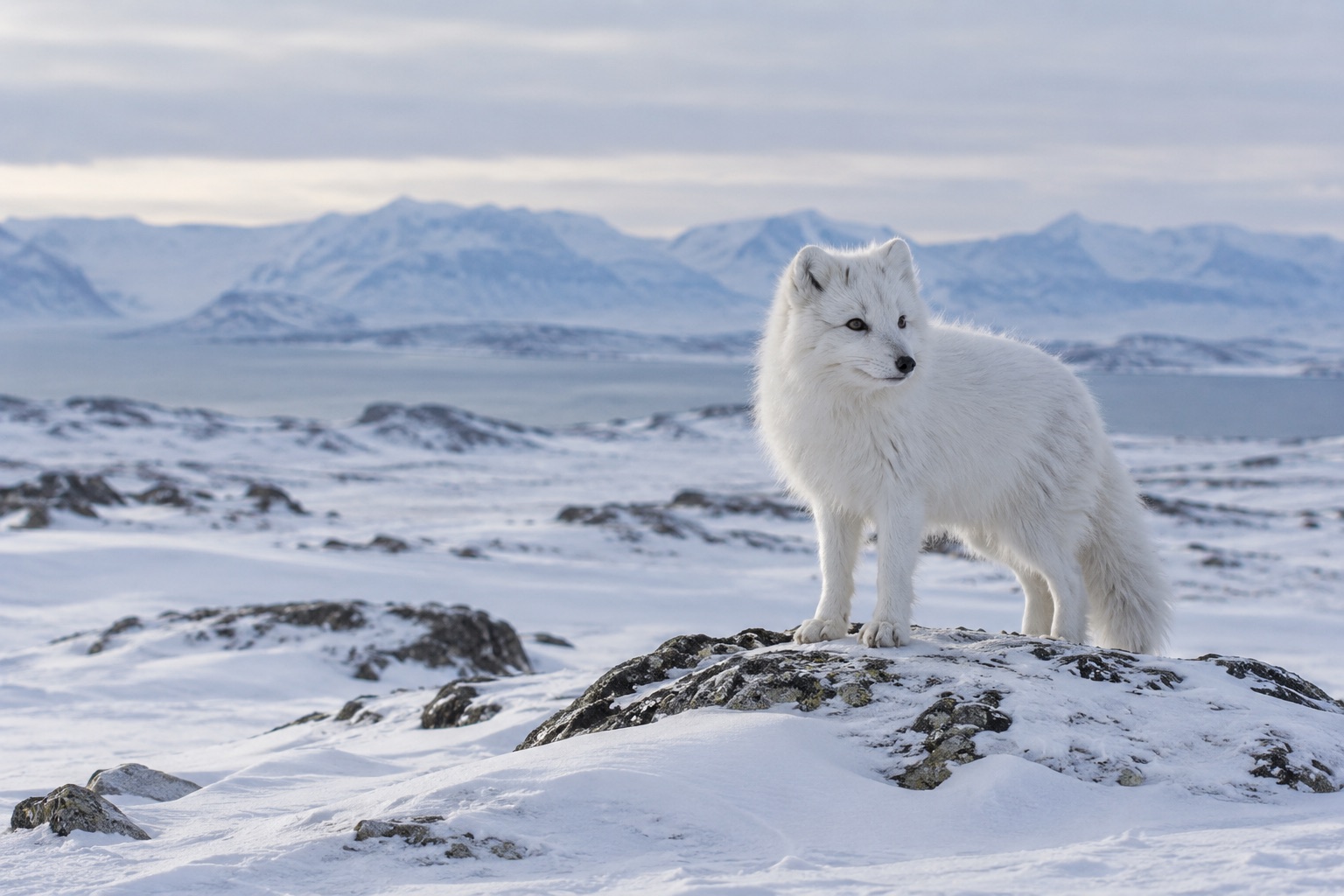
An Arctic fox has thick fur. The fur helps trap a layer of air near its body. This layer slows the loss of body heat. The fur does not create heat; it helps the fox keep the heat its body produces.
Against snowy ground, a white winter coat can also make an Arctic fox less visible. Blending into the surroundings is called camouflage. Colour and thickness help in different ways.
When we read about an adaptation, it helps to ask three questions: What is the environment like? What is the feature? How does the feature help? A useful explanation connects all three, rather than only naming the feature.
四個詞,放回文章讀。
- environment
- 環境。
- adaptation
- 適應特徵。
- heat loss
- 熱量散失。
- camouflage
- 偽裝。
老師再問一步
Thick fur helps.
But how?
從「特徵」走到「怎樣幫助」,才把因果讀進去。