
ProtostarChinese
← All Chinese courses

Chinese Writing

Good ideas need a way onto the page.

Give ideas a reader, a purpose and a clear structure. Your child plans, drafts and returns to the same piece to make it work better.

One-to-one25 minutesTaught in Mandarin
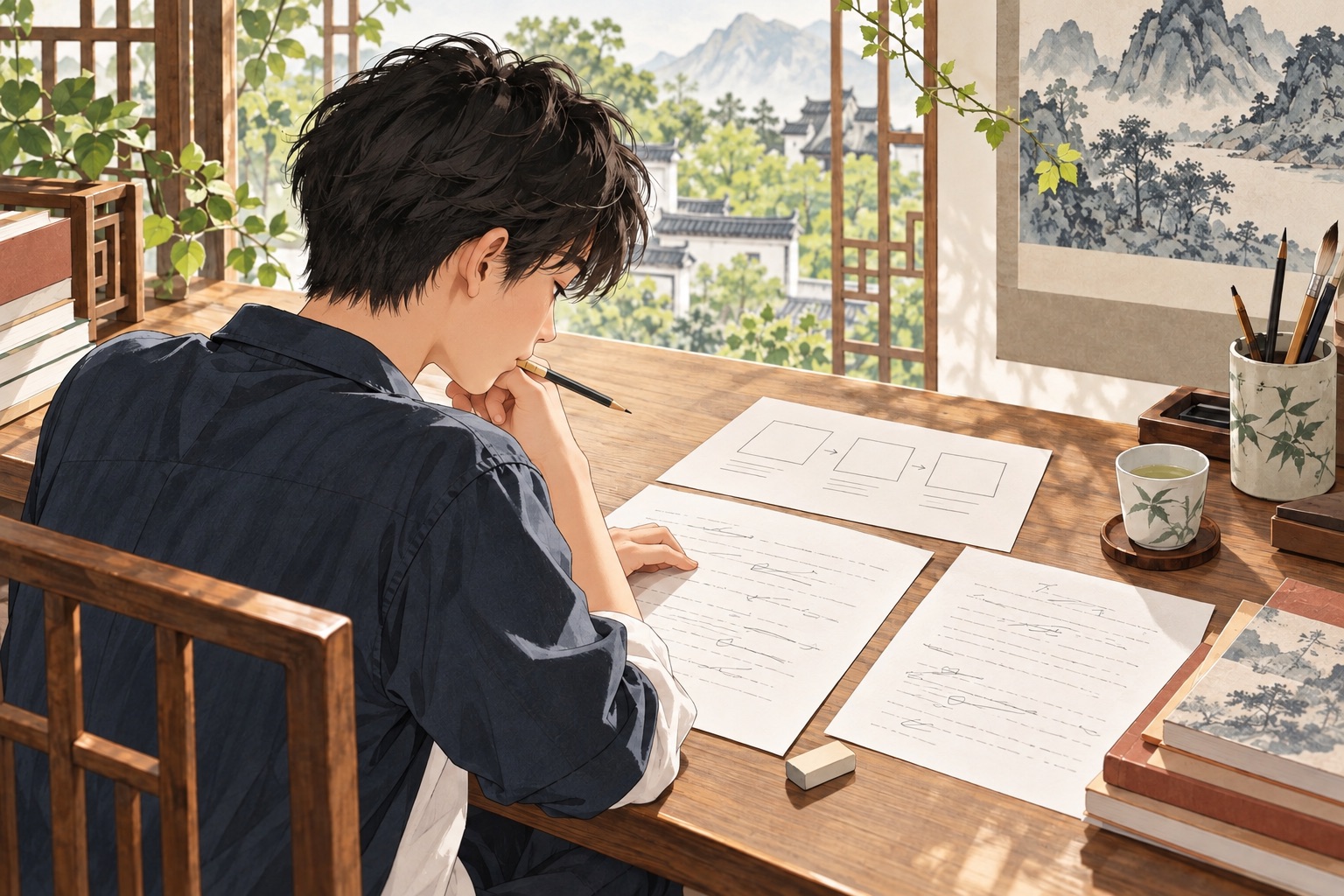
Illustration of a young learner revising a draft with an outline and organizing the structure of a piece of writing

See the learning

W3 · A Book-Corner Guide for New Classmates

One guide. Decisions that help its reader.

Reader: a classmate borrowing a book for the first time.

再放好。

Too vague: what goes where?

把登记卡放进“借出”盒。

Specific: put the registration card in the loan box.

  1. Choose useful information
  2. Give the guide a structure
  3. Make one instruction usable
View the full example

Reader: a classmate borrowing a book for the first time.

Purpose: give instructions the reader can follow.

Choose useful information

每人每次只借一本。
把登记卡放进“借出”盒。

Keep the borrowing limit and the card instructions. A description of a pretty shelf can wait.

Give the guide a structure

  1. 借书Borrow
  2. 还书Return
  3. 找不到卡If a card is missing

One teaching model develops through planning, drafting and revision across lessons.

Choose by ability

A pathway that matches what they can do now.

Choose a level around what your child can currently say, write or type in Chinese. A complete piece develops through planning, drafting and revision.

  • W1

    Build complete sentences and short paragraphs from familiar ideas.

  • W2

    Select details and organise a complete short piece.

  • W3

    Write for a purpose: explain, present a view, communicate or respond to reading.

  • W4

    Bring sources and viewpoints together, and make deliberate choices of style.

Chinese lesson titles are shown with translations for parents. Materials can use Simplified or Traditional Chinese according to need.

View the full syllabus

W1 Sentences and short paragraphs

24 lessons · 25 minutes each

Complete sentences and their elements, sentence expansion, picture sequencing, order of events, character actions, objects and senses, personal experiences, and independent short paragraphs.

Unit 01 · Complete sentences and their elements3 lessons +
  1. 誰在做甚麼Who Is Doing What?
  2. 把等候寫清楚Describe Waiting Clearly
  3. 讀給沒看圖的人聽Read It to Someone Who Has Not Seen the Picture
Unit 02 · Expanding sentences3 lessons +
  1. 一句話加甚麼才有用What Makes an Added Detail Useful?
  2. 讓三句有變化Vary Three Sentences
  3. 刪掉多餘的形容Remove Unnecessary Descriptions
Unit 03 · Sequencing pictures3 lessons +
  1. 哪張圖在前面Which Picture Comes First?
  2. 三格寫成一段Turn Three Panels into a Paragraph
  3. 補回跳過的一格Fill In the Missing Panel
Unit 04 · Order of events3 lessons +
  1. 做過的事怎樣記How to Record Something You Have Done
  2. 讓讀者跟得上Help the Reader Follow Along
  3. 交換一步會怎樣What Happens If We Swap a Step?
Unit 05 · Character actions3 lessons +
  1. 用行動認識一個人Get to Know Someone Through Actions
  2. 把學會的過程寫出來Describe the Process of Learning
  3. 讓「好」有證據Give Evidence for “Good”
Unit 06 · Objects and senses3 lessons +
  1. 先觀察再形容Observe Before Describing
  2. 寫出這件物品的不同Show What Makes This Object Different
  3. 用準確的詞替換「很」Replace “Very” with Precise Words
Unit 07 · Personal experiences3 lessons +
  1. 小事情也能寫Small Moments Are Worth Writing About
  2. 把幫忙寫成短段Write a Short Paragraph About Helping
  3. 感受有沒有跟事情連上Do the Feelings Connect to the Events?
Unit 08 · Independent short paragraphs3 lessons +
  1. 自己決定想寫的一刻Choose a Moment to Write About
  2. 獨立完成一個短段Complete a Short Paragraph Independently
  3. 自己修一處,再寫新的一刻Revise One Part, Then Write About a New Moment

W2 Paragraphs and complete pieces

24 lessons · 25 minutes each

Writing about people, recounting events, describing places, imaginative stories, selecting key details, and independently writing complete short pieces.

Unit 01 · People: Revealing character through an event4 lessons +
  1. 一件事認識一個人Know a Person Through One Event
  2. 把人物寫進一件事Place a Character in an Event
  3. 讓特點有證據Support Character Traits with Evidence
  4. 換一個人,方法還在A Different Person, the Same Method
Unit 02 · Events: Changes through cooperation4 lessons +
  1. 找到事件的轉變Find the Change in an Event
  2. 寫出事情怎樣轉好Describe How Things Improved
  3. 檢查轉折有沒有跳步Check for Missing Steps in the Turning Point
  4. 新任務中的小轉折A Small Turning Point in a New Task
Unit 03 · Places: Observation and sequence4 lessons +
  1. 選一個觀察位置Choose an Observation Point
  2. 讓景物按順序出現Present the Scenery in Order
  3. 把空泛的「美」寫實Make “Beautiful” Concrete
  4. 換一角仍有順序Keep the Order from a New Viewpoint
Unit 04 · Imaginative stories: Rules and consequences4 lessons +
  1. 想像也要有規則Imagination Needs Rules Too
  2. 靠選擇推動故事Move the Story Through Choices
  3. 讓魔法前後一致Keep the Magic Consistent
  4. 新角色的新難題A New Challenge for a New Character
Unit 05 · Choosing what matters4 lessons +
  1. 不是每件事都要寫Choose Which Events to Include
  2. 把筆墨用在關鍵一刻Focus on the Crucial Moment
  3. 刪一段,補一處Remove a Paragraph, Add a Detail
  4. 為新題留下必要材料Keep the Essential Material for a New Topic
Unit 06 · Independent complete short pieces4 lessons +
  1. 為一位讀者選一個題目Choose a Topic for One Reader
  2. 把自己的提綱寫成文章Turn Your Outline into a Full Text
  3. 根據讀者反應改一遍Revise Based on the Reader's Response
  4. 換讀者寫一段Write a Paragraph for a Different Reader

W3 Genres and purpose

24 lessons · 25 minutes each

Explaining things and processes, opinions and reasons, practical communication, and responses to reading.

Unit 01 · Explaining things and processes6 lessons +
  1. 讓沒借過書的人看懂Help a First-Time Book Borrower Understand
  2. 排出不會漏步的流程Plan a Process Without Missing Steps
  3. 起草一:把借書說清楚Draft 1: Explain How to Borrow a Book
  4. 起草二:接上還書與例外Draft 2: Add Returns and Exceptions
  5. 請讀者照着做Ask a Reader to Follow the Instructions
  6. 新流程短遷移Apply the Method to a New Process
Unit 02 · Opinions and reasons6 lessons +
  1. 意見要說清楚Make Your Opinion Clear
  2. 理由與例子相配Match Reasons with Examples
  3. 起草一:主張與第一個理由Draft 1: A Claim and Its First Reason
  4. 起草二:補第二理由與建議Draft 2: A Second Reason and a Suggestion
  5. 檢查說服力來自哪裏Check What Makes the Writing Persuasive
  6. 新提案的一段理由A Paragraph of Reasons for a New Proposal
Unit 03 · Practical communication6 lessons +
  1. 先想對方需要知道甚麼Consider What the Other Person Needs to Know
  2. 把申請排得容易回覆Organize a Request for an Easy Reply
  3. 起草一:說明借甚麼、為甚麼Draft 1: Explain What to Borrow and Why
  4. 起草二:把承諾寫得可檢查Draft 2: Make Promises Checkable
  5. 替讀者做一次信息檢查Check the Information for the Reader
  6. 換目的寫一則短通知Write a Short Notice for a New Purpose
Unit 04 · Reading responses: Feelings and the text6 lessons +
  1. 讀後感不只是重說故事A Reading Response Goes Beyond Retelling
  2. 把感受連到一處文字Connect a Feeling to a Passage
  3. 起草一:交代所讀與主要感受Draft 1: Introduce the Reading and Main Response
  4. 起草二:用聯想加深感受Draft 2: Deepen the Response Through Connections
  5. 感動在哪裏要讓讀者看見Show the Reader What Moved You
  6. 讀另一段也能說感受Express a Response to a New Passage

W4 Integrated expression and style

24 lessons · 25 minutes each

Narrative style and emotion, explanations that integrate information, arguments and different perspectives, and independent pieces for real readers.

Unit 01 · Narrative style and emotion6 lessons +
  1. 同一件事可以怎樣說Different Ways to Tell the Same Event
  2. 把重點一刻放慢Slow Down the Key Moment
  3. 起草一:讓讀者走進場景Draft 1: Bring the Reader into the Scene
  4. 起草二:用行動呈現轉變Draft 2: Show Change Through Actions
  5. 選擇最能傳達的版本Choose the Version That Communicates Best
  6. 同一場景換一種語氣Retell the Same Scene in a Different Tone
Unit 02 · Explanations that integrate information6 lessons +
  1. 先分清知道與猜想Separate Knowledge from Guesses
  2. 用問題把資料連起來Connect Information Through Questions
  3. 起草一:說明一週使用情況Draft 1: Describe a Week of Use
  4. 起草二:連結需要與建議Draft 2: Link Needs to Suggestions
  5. 逐句查來源與推論Check Sources and Inferences Sentence by Sentence
  6. 新資料的短解說A Short Explanation of New Information
Unit 03 · Arguments and different perspectives6 lessons +
  1. 先定判斷標準再表態Set Criteria Before Taking a Position
  2. 把反方說準確Represent the Opposing View Accurately
  3. 起草一:建立主張與理由Draft 1: Establish a Claim and Reasons
  4. 起草二:回應差異並收束Draft 2: Address Differences and Conclude
  5. 檢查論證是否公平且有力Check Whether the Argument Is Fair and Strong
  6. 新的兩難也能公允回應Respond Fairly to a New Dilemma
Unit 04 · Independent writing for real readers6 lessons +
  1. 為一位真實讀者定目的Set a Purpose for a Real Reader
  2. 把經驗變成對方能用的材料Turn Experience into Useful Material for Someone Else
  3. 起草一:讓讀者看見問題與示例Draft 1: Show the Problem and Examples
  4. 起草二:把方法寫得能試Draft 2: Make the Method Ready to Try
  5. 用真實試讀改作品Revise Through Feedback from Real Readers
  6. 把方法轉交給新讀者Pass the Method On to a New Reader

Find their next step in Chinese.

Share your child’s experience and goals. Arrange a trial, receive the teacher’s assessment, and choose with a clearer understanding of their needs.

Ask about an introductory trial

Country and language

International English

Asia Pacific

Africa

Burkina Faso

Burundi

Central African Republic

Democratic Republic of the Congo

Ethiopia

Ghana

Malawi

Mozambique

Nigeria

Rwanda

Senegal

Sierra Leone

South Africa

Tanzania

Uganda

Zimbabwe

Europe

Albania

Belgium

Croatia

Czechia

France

Ireland

Latvia

Portugal

Romania

Slovakia

United Kingdom

North America

Canada

Jamaica

Mexico

United States

South America

Argentina

Colombia